
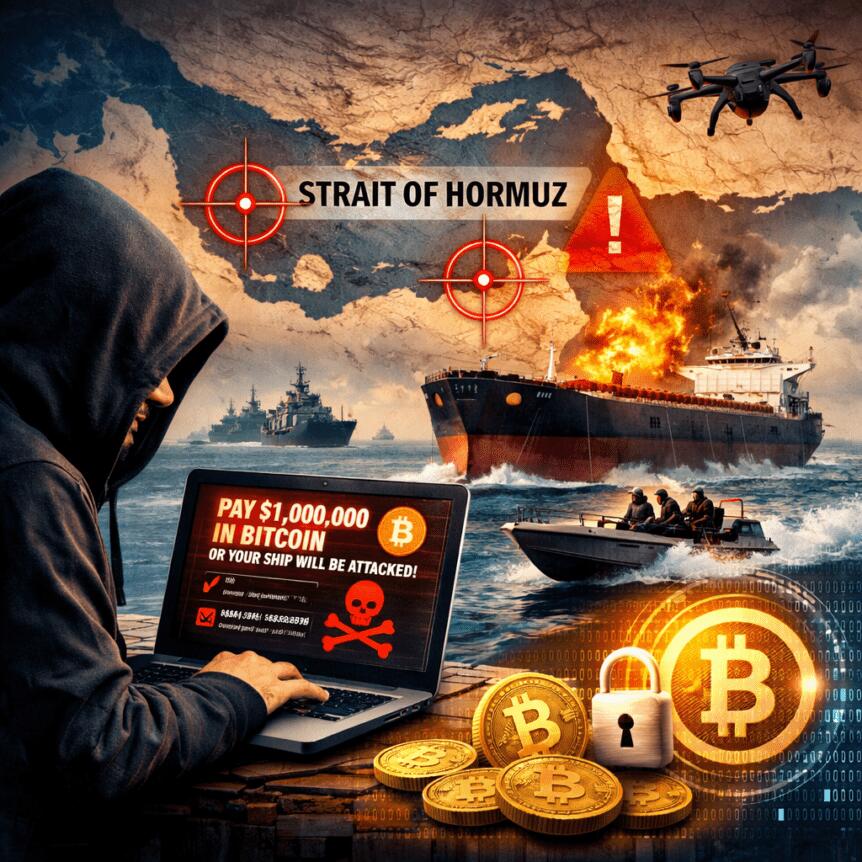
According to maritime risk agency Marisks, fraudsters impersonating Iranian authorities have targeted shipping companies with cryptocurrency-based demands to secure passage through the Strait of Hormuz.
Marisks said an unknown group contacted shipowners claiming to represent Iran’s security services, first requesting verification documents and then demanding payment in Bitcoin or USD Tether for transit clearance. Reuters reported on the fraudulent message and pointed out that it did not originate from Iranian authorities. Tehran did not comment publicly.
The warning comes as the Strait of Hormuz remains largely closed due to regional hostilities. The strait, a vital conduit for global energy transport, handled about a fifth of the world’s oil and LNG before the recent explosion. Earlier this month, Cointelegraph reported that Iran was considering paying tolls in BTC for ships passing through Hormuz, possibly allowing empty tankers to pass free while charging other vessels around $1 per barrel of oil.
Key Takeaways
- Marisks warns that scams purporting to be Iranian security services are demanding cryptocurrency payment (BTC or USDT) for transit to Hormuz along with requests for verification documents.
- According to Marisks and Reuters, the message did not come from official Iranian authorities. Tehran has not commented publicly on the claims.
- The Strait of Hormuz remains largely closed amid hostilities in the Middle East, highlighting the vulnerability of global energy flows through this gateway.
- The risk of sanctions may increase. Payments related to Iranian waterways could be treated as material support and could potentially violate U.S. and international sanctions.
- This episode highlights the broader debate about the role of cryptocurrencies in sanctions regimes and regulatory risks for both shipping and cryptocurrency actors.
Crypto tolls, fraud, and the geopolitics of Hormuz
The messages Marisks describes demonstrate classic manipulation. In other words, the argument goes, assuming security clearance associated with a cryptocurrency payment, the transfer is allowed at a predetermined time once the verification step is complete. In at least one case, the channel suggested that Iran’s security services would assess the eligibility of cryptocurrency payments in BTC or USDt before deciding to do so. Marisks noted that the ship that recently came under fire while attempting to exit the strait may have received such instructions, but that this has not been independently confirmed. Cointelegraph reached out to Marisks for comment but did not immediately receive a response.
The episode opens against a backdrop of escalating geopolitical tensions surrounding Hormuz. Al Jazeera reported that the strait remains closed amid the conflict, a situation that raises the stakes for insurers, operators and lenders who rely on predictable access to global energy markets. As regional dynamics evolve, strategic gateways remain a focus for policy and risk assessment.
Previous reports have described Iran as weighing cryptocurrency-based tolls to generate revenue from sailings through Hormuz. This is an approach that could tip the balance between open maritime routes and approved finance. Cointelegraph’s report cited the debate over BTC and USDt as potential toll collection vehicles, reflecting a broader conversation about the usefulness of cryptocurrencies in sanctioned economies and the real risks of those accepting cryptocurrency payments through threats or misrepresentations. For additional context, see our previous analysis of the cryptocurrency toll debate in Iran.
Sanctions risk and its impact on operators
In addition to operational risks, industry analysts warn there could be serious implications for compliance. Caitlin Martin, senior intelligence analyst at Chainalysis, told Cointelegraph that any payments related to Iranian-controlled waterways could constitute “material support” and potentially violate U.S. and international sanctions targeting groups linked to the Islamic Revolutionary Guard Corps. The warning highlights that cryptocurrency payments that are conditioned on access to strategic corridors can result in exposure far beyond immediate harm.
These developments lie at the intersection of geopolitical strategy and evolving cryptocurrency policy. Iran’s interest in leveraging digital currencies for energy transport has been discussed in cryptocurrency policy circles, with discussion of its potential benefits against a firm sanctions regime. For readers seeking deeper background, our press release exploring BTC and USDt toll dynamics in Iran remains a suitable companion piece.
As authorities monitor illicit use of cryptocurrencies in restricted corridors, shipowners, operators and counterparties will be watching for official guidance on sanctions enforcement and regulatory clarifications related to cryptocurrency tolls. The risk environment around Hormuz, already shaped by conflict, insurance considerations, and reliability of communications, adds another layer of complexity to the global maritime and crypto communities.
As this situation develops, keep a close eye on official statements from regulators and industry associations. The next steps will likely depend on how sanctions enforcement perspectives evolve and whether cryptocurrency-based tolling proposals advance or retreat amid ongoing geopolitical tensions.