

This guide provides a comprehensive overview of the process for converting Bitcoin (BTC) to wrapped or tokenized formats (cbBTC, wBTC, and others) for use as collateral to borrow stablecoins such as USDT and USDC. We explore several unique paths and detail the associated platforms, benefits, and inherent risks of each approach. The information presented is based on research conducted in September 2025 and is provided for information purposes only.
Note: Some of the strategies listed below are for intermediate and advanced users. If you’re not sure how to approach this, get professional cryptocurrency advice.
Understanding Wrapped Bitcoin
Wrapped Bitcoin (wBTC) and its variants, e.g. cbBTC on Coinbaseis a token of other blockchains (mainly Ethereum) that represents Bitcoin. Each wrapped token is backed 1:1 by the same amount of BTC it is holding. This process allows Bitcoin, built on its own blockchain, to be leveraged within the decentralized finance (DeFi) ecosystem to enable activities such as lending, borrowing, and trading on platforms that support these tokens.
Option 1: Coinbase and Aave Protocol – BTC to cbBTC
This route involves converting BTC to cbBTC using Coinbase or Bybit and then offering it as collateral to the Aave Protocol, a leading decentralized lending platform.

route:

1.  Convert BTC to cbBTC: Within your Coinbase account, you can wrap your BTC into cbBTC. This is typically done by sending BTC from your main Coinbase account to a Base or Ethereum address, where it is automatically converted to cbBTC (1).
2. Convert BTC to cbBTC: You can also use Bybit crypto exchange to convert BTC to cbBTC. Bybit will also let you withdraw cbBTC on different chains, making it easier for you to take it to different blockchain.
2.  Supply cbBTC to Aave: Connect a compatible web3 wallet (e.g., MetaMask, Coinbase Wallet, Ledger, ) to the Aave application. Transfer the cbBTC from your Coinbase account to this wallet.
3.  Borrow USDT/USDC: On the Aave platform, supply your cbBTC to the lending pool. You can then borrow USDT or USDC against your supplied collateral, up to the specified collateralization ratio.
profit:
•   Trust and Security: Coinbase is a well-established and regulated entity, providing a degree of trust in the custody of the underlying BTC that backs cbBTC.
•   Deep Liquidity: Aave is one of the largest and most liquid DeFi lending protocols, offering substantial pools for borrowing and lending.
•   Ecosystem Integration: cbBTC is designed for the Base ecosystem, which may offer lower transaction fees and faster speeds compared to the Ethereum mainnet.
| platform | collateral assets | Stablecoins you can borrow | APY supply | APY(USDC) Lending | APY(USDT) Loan |
| ghost | cbBTC | USDT/USDC | <0.01% | 5.82% | 6.85% |
| Camino Finance (Solana) | cbBTC | USDT/USDC | 3.99% (compensation) | – | – |
Note: The above data changes rapidly. Please check the official website to get the latest data.
danger:
•   Centralization: The primary risk is the centralized nature of cbBTC. The underlying Bitcoin is held in custody by Coinbase, creating a single point of failure. If Coinbase were to face regulatory issues or insolvency, the value and redeemability of cbBTC could be compromised. However, Coinbase is a NASDAQ listed website and the trust on their products including cbBTC and BASE blockchain is rising.
•   Smart Contract Vulnerabilities: Aave, like all DeFi protocols, is subject to smart contract risk. A bug or exploit in the Aave protocol could lead to a loss of funds.
•   Liquidation Risk: If the price of BTC (and therefore cbBTC) drops significantly, your collateral may be liquidated to cover your loan. This is an automated process in DeFi protocols.
Option 2: Use Wrapped Bitcoin (WBTC) for stablecoin lending on DeFi platforms
This option leverages Wrapped Bitcoin (WBTC), the most widely adopted tokenized form of Bitcoin on existing DeFi lending platforms such as Aave or Compound.
route:
1.  Convert BTC to WBTC: You can convert BTC to WBTC through various centralized exchanges (e.g., Kraken) or decentralized services that act as merchants in the WBTC minting process.
2.  Supply WBTC to a Lending Platform: Similar to the cbBTC route, you would transfer your WBTC to a web3 wallet and supply it as collateral on a platform like Aave or Compound.
3. Borrow USDT/USDC: Borrow stablecoins against your WBTC collateral.| platform | collateral assets | Stablecoins you can borrow | APY supply | APY(USDC) Lending | APY(USDT) Loan |
| Aave Protocol | WBTC | USDC, USDT, etc. | <0.01% | 5.82% | 8.65% |
| Complex finance | WBTC | USDC, USDT, etc. | variety | variety | variety |
profit:
•   Widespread Adoption: WBTC is the most recognized and integrated form of wrapped Bitcoin, supported by a vast array of DeFi applications and enjoying the highest liquidity.
•   Decentralized Governance (Partial): While still reliant on custodians, the WBTC DAO (Decentralized Autonomous Organization) adds a layer of community governance to the process.
•   Proven Track Record: WBTC has been in existence longer than many other wrapped Bitcoin variants and has a more established history.
danger:
•   Custodian Risk: WBTC relies on a consortium of custodians to hold the underlying BTC. While this is more decentralized than a single custodian like Coinbase, it still presents counterparty risk.
•   Smart Contract and Liquidation Risks: These are the same as with Option 1 and are inherent to using DeFi lending protocols.
•   Wrapping/Unwrapping Fees: The process of minting and burning WBTC can involve fees that may not be present in the more streamlined Coinbase cbBTC process.
Option 3: Liquidity Protocol for Integrated Bitcoin Lending
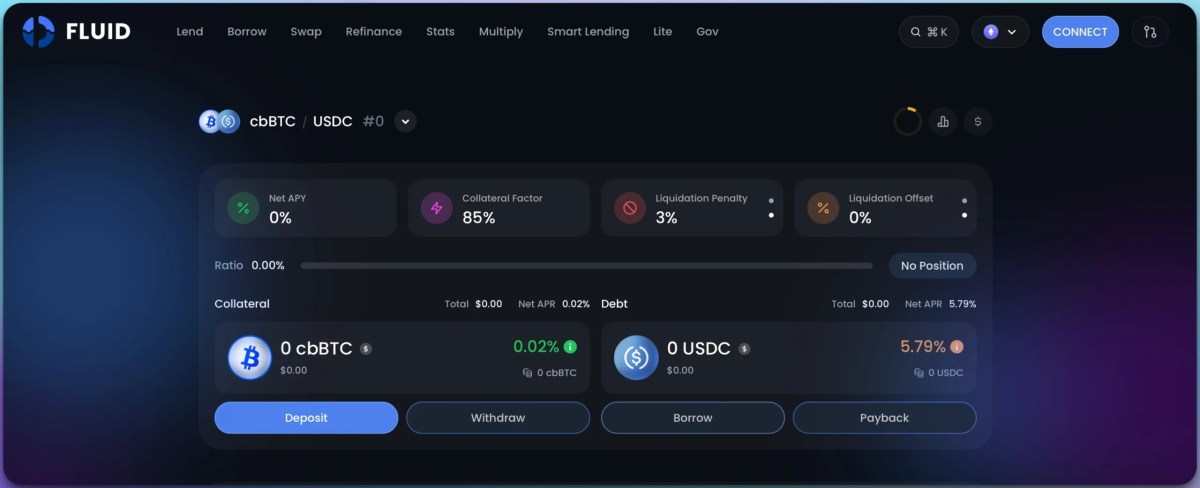
Fluid is a modern lending protocol that offers a more integrated experience with specific vaults for lending and borrowing a variety of assets, including cbBTC and WBTC.
route:
1.  Acquire cbBTC or WBTC: Follow the conversion steps outlined in Option 1 or 2.
2.  Use Fluid Protocol Vaults: Connect your wallet to the Fluid application and select a vault that matches your desired collateral and debt asset (e.g., cbBTC/USDC, WBTC/USDT).
3.  Create a Position: Supply your wrapped Bitcoin and borrow stablecoins directly within the selected vault.
profit:
•   Potentially Better Rates: As a newer protocol, Fluid may offer more competitive interest rates or incentives to attract users and liquidity.
•   Specialized Vaults: The vault structure allows for more specific risk management and potentially more efficient use of capital.
•   Growing Ecosystem: Engaging with newer protocols can provide opportunities to benefit from their growth and future token incentives.
danger:
•   Newer Protocol Risk: Fluid has a shorter track record than Aave or Compound, which can imply higher smart contract risk and less certainty about its long-term stability.
•   Lower Liquidity: While growing, Fluid’s liquidity pools are smaller than those of the major protocols, which could lead to higher slippage or difficulty entering/exiting large positions.
•   Complexity: The variety of vaults and options may be more complex for users who are new to DeFi.
Option 4: Centralized Bitcoin Lending Platform
For those who prefer a simpler, non-DeFi approach, centralized lending platforms offer a simple way to borrow native Bitcoin without the need for packaging. I’ve talked about a platform called Nexo before and shared what I thought was an honest review. I use Nexo for myself, but with a centralized lending platform there is counterparty risk so I keep it small.
route:
1.  Create an Account: Sign up for an account on a platform like Nexo or YouHodler.
2.  Deposit BTC: Transfer your native BTC directly to your account on the platform.
3.  Borrow Stablecoins: Request a loan in USDT or USDC, using your deposited BTC as collateral.
profit:
•   Simplicity: This is the most straightforward option, with a user experience similar to a traditional financial service. There are no web3 wallets, gas fees, or complex protocol interactions.
•   Customer Support: Centralized platforms typically offer dedicated customer support.
•   Insurance: Many centralized platforms provide insurance on custodial assets, offering a degree of protection against hacks.
danger:
•   Custodial Risk: This is the most significant risk. You are entrusting your Bitcoin to a third party. If the platform is hacked, mismanaged, or becomes insolvent, you could lose your funds entirely.
•   Lack of Transparency: The internal workings, reserves, and lending activities of centralized platforms are often opaque compared to the public, on-chain nature of DeFi protocols.
•   Terms and Conditions: The platform has full control over the terms of the loan and can change them. They can also freeze your account or assets if they deem it necessary.
Summary and Recommendations: Get USDT, USDC Interest Loans with Bitcoin Collateral
Choosing the right Bitcoin loan option to borrow stablecoins depends on your individual risk tolerance, technical expertise, and priorities. Here’s a summary to help you make your decision:
| characteristic | DeFi (Aave, Compound, Liquid) | Centralized (Nexo, YouHodler) |
| money control | High (non-custodial, keys held) | Low (managed, platform holds assets) |
| transparency | High (all transactions are on-chain and public) | Low (task is mostly opaque) |
| complexity | High (requires web3 wallet, understanding gas fees, etc.) | Low (simple web2 style user interface) |
| risk profile | Smart contract bugs, liquidation, wrapped asset risk | Governance risks (platform failure/hacking), lack of transparency |
| potential profits | Yields may be higher due to farming and token incentives | It is usually fixed and may be lower than its DeFi potential. |
For users who prioritize simplicity:
• Option 4 (Centralized Lending) is the most suitable. It avoids the complexities and smart contract risks of DeFi. Some of them like Nexo have no lock-in feature, though you may incurr withdrawal fees and the risk profile as stated above. For users who are familiar with DeFi and value trust in custodians:
• Option 1 (Coinbase/Aave/Kamino) offers a good balance, combining the robust and battle-tested Aave protocol with the perceived security of Coinbase as the custodian for cbBTC.For DeFi native users seeking maximum decentralization and adoption:
• Option 2 (WBTC on Aave/Compound) is the standard choice. WBTC’s wider adoption and more decentralized (though still custodial) model make it a cornerstone of the DeFi ecosystem.Last words:
The DeFi world is growing rapidly, and my suggestion is to regularly monitor your preferred protocol for the best returns and don’t hesitate to move your funds from one protocol to another (since the cost of movement is fractional) and the returns are high. Don’t take unwanted risks by using less established DeFi platforms for additional profits. You can also use Manus or similar AI tools to regularly monitor the health of these faulty platforms and see which ones are providing the best returns.
Before proceeding with any of these options, it is important to do thorough research, understand the specific terms and conditions of each platform, and not invest more than you can afford to lose.
Please help us improve. Was this helpful?
Thanks for your feedback!