
Key Takeaways
- Luxembourg’s finance minister believes Bitcoin is an essential element of Europe’s competitive financial strategy.
- Luxembourg’s sovereign wealth fund is the first in Europe to allocate 1% of its portfolio to Bitcoin.
Share this article
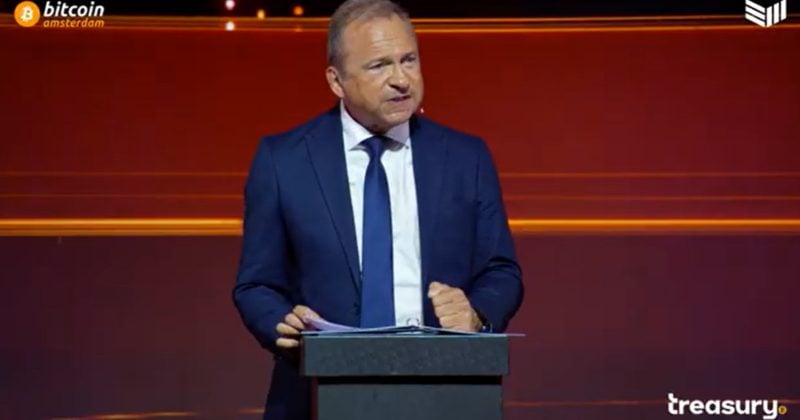
Luxembourg Finance Minister Gilles Roth said on Thursday that Luxembourg’s Intergenerational Sovereign Wealth Fund (FSIL) has allocated 1% of its portfolio exclusively to Bitcoin, despite having the option to invest in other cryptocurrency assets.
“The fund’s investment policy allows for allocations to all cryptocurrency assets, but we have chosen to invest only in Bitcoin,” Roth said while speaking at Bitcoin Amsterdam 2025. “And as Michael Saylor once said, there is no second best option, because we are in it for the long haul.”
Last month, the Treasury said FSIL would allocate 1% of its portfolio to Bitcoin and other cryptocurrencies through ETFs as part of a strategy to bridge traditional finance and blockchain innovation. FSIL was the first in Europe to invest in Bitcoin.
Roth also positioned cryptocurrencies, particularly Bitcoin, as part of Europe’s competitive strategy, adding that digital assets are now central to global policy discussions. He believes Bitcoin can help make Europe more competitive, calling it a system that “never closes.”
“I believe cryptocurrencies, especially Bitcoin, are part of the solution,” Roth said. “Make no mistake, there is more and more research on Bitcoin, even among European political leaders.”
According to him, Luxembourg manages cross-border investment assets of more than €7.6 trillion, one-third of which are alternative funds, making it the second-largest alternative fund hub after the United States. The country has more than 115 banks from more than 20 countries.
Roth outlined Luxembourg’s decade-long history of working with digital assets, noting that Luxembourg regulated Bitstamp, Europe’s first cryptocurrency exchange.
He said the country is home to cryptocurrency exchanges, custodians and service providers. Coinbase established an EU cryptocurrency hub in Luxembourg this summer in accordance with Markets for Cryptocurrency Assets (MiCA) regulations.
“This has never been about hype. It’s about a bridge between code and capital,” Roth said.
“My view is that our economy will not transition to the Bitcoin standard,” Roth said. “But at the same time, Bitcoin will undoubtedly be part of the future of finance.”