
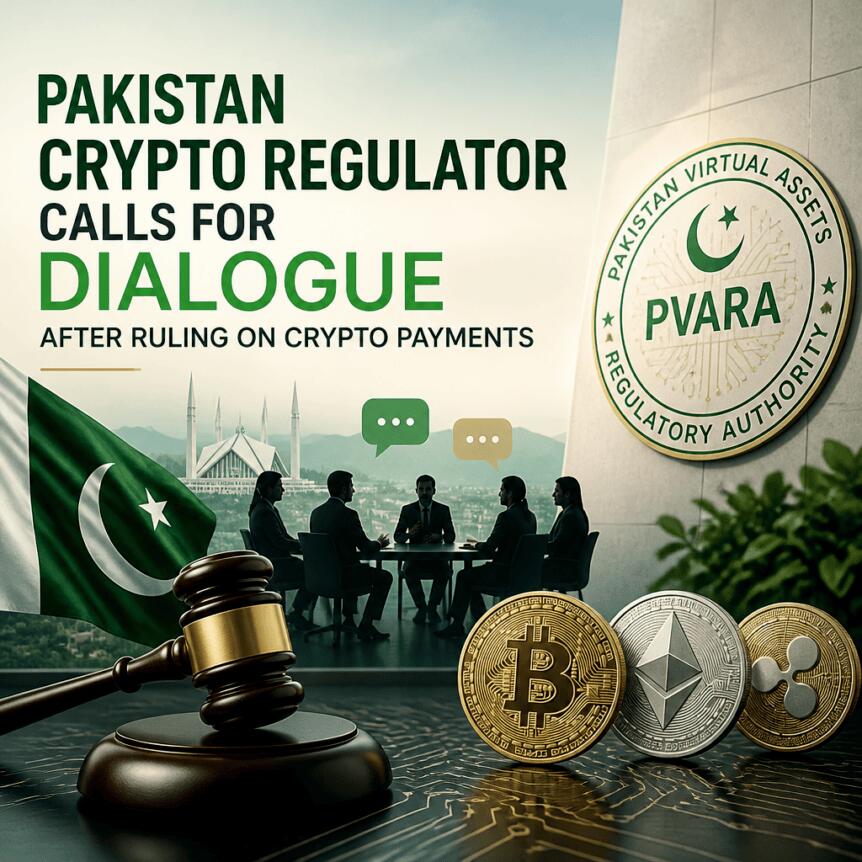
Pakistan’s virtual assets regulator is calling for ongoing dialogue with Islamic scholars on how digital assets should be treated in accordance with Shariah principles following a religious ruling that declared certain cryptocurrency-based purchases to be inadmissible. Pakistan Virtual Asset Regulatory Authority (PVARA) Chairman Bilal bin Saqib said during a meeting with renowned scholar Mufti Taqi Usmani that there is a need to focus on blockchain technology, digital assets, stablecoins and tokenized real assets (RWA) and protect the public from fraud and financial harm.
Although Saqib did not directly dispute specific religious claims, he emphasized that different categories of digital assets should not be judged through a single framework. The comments come at a sensitive moment for Pakistan, where regulators are building out a licensing regime for cryptocurrencies, but religious views could have a meaningful impact on wider public acceptance.
Key Takeaways
- PVARA Chairman Bilal bin Saqib called for continued discussions with academics after Mufti Taqi Usmani upheld the ruling on the purchase of cryptocurrency funds.
- Saqib argued that digital assets, stablecoins and tokenized RWAs require separate technical and Shariah reviews rather than one comprehensive assessment.
- The religious controversy comes as Pakistan expands its regulated cryptocurrency sector following the Virtual Assets Act 2026 and new banking access regulations.
- Pakistani regulators say protecting the public from fraud and exploitation is central to the country’s approach.
Religious rulings target cryptocurrency-based purchases.
According to Pakistani newspaper Dawn, Usmani and five other scholars signed an Islamic legal ruling published by Jamia Darul Uloom Karachi. According to the reported decision, purchases using cryptocurrencies, including stablecoins such as USDT, are not permitted according to scholars’ interpretation of Islamic law.
Dawn reported that the ruling centers on the view that digital tokens do not qualify as recognized property or wealth. In other words, scholars argue that even when tokens are used in purchase transactions, their status according to Islamic legal reasoning does not meet the relevant criteria.
Saqib did not directly challenge the ruling’s conclusions in his remarks. Instead, he called for continued engagement from academics, regulators and industry participants, suggesting that distinctions between asset types and their underlying functions should be part of the assessment process.
Why Saqib’s “Other Category” Position Matters
In a Saturday post on X, Saqib said his discussion covered blockchain technology and the spectrum of digital assets, including stablecoins and tokenized real-world assets. He also pointed out operational concerns. To protect Pakistanis from fraud, exploitation and other forms of financial harm.
Crucially, Saqib argued that the “diverse categories of digital assets” warrant “careful technical evaluation coupled with rigorous Shariah scrutiny, rather than being viewed through a single lens.” This framework implies two practical points about Pakistan’s regulatory trajectory.
First, this suggests that Pakistani regulators may be preparing for a granular approach that considers the structure and usage of specific tokens through religious review and compliance efforts, rather than treating all virtual assets the same. Second, it highlights the possible tension between market construction and public acceptance. Although licensing frameworks can enable officially regulated services, religious objections, especially those targeting consumer-facing actions such as purchases, can still shape adoption.
This sensitivity is amplified by Pakistan’s demographics. Citing the 2023 National Census report, the article points out that Pakistan’s 2023 census identified approximately 231.7 million people, or 96.35% of the population, as Muslims. If religious rulings become prominent in everyday commerce, regulatory progress may face additional obstacles beyond enforcement and licensing mechanisms.
Regulatory change in Pakistan: from restrictions to licensing
The religious debate is unfolding as Pakistan continues to transition from years of restrictions to an officially regulated virtual asset industry. Last April, the Central Bank of Pakistan allowed banks to open accounts with virtual asset service providers (VASPs) licensed by PVARA. As previously reported by Cointelegraph, the move ends eight years of restrictions on regulators handling cryptocurrencies.
These banking updates follow the passage of Pakistan’s Virtual Assets Act 2026 last March, which established PVARA as the statutory body responsible for licensing and supervision of virtual asset activities.
For investors and businesses, this expansion of regulation increases the importance of how digital assets are categorized not only legally, but also culturally and religiously. A stable regulatory environment can reduce operational risk for compliant companies, but consumers’ comfort with using specific tokens may still be subject to religious rulings and interpretations.
Saqib’s remarks appear aimed at keeping that bridge intact, reducing friction and fostering a dialogue that could clarify how scholars and regulators view the role of various blockchain-based tools.
What to watch for next: Conversation outcomes and compliance implications
The immediate uncertainty is whether religious authorities will reexamine their positions if they take a more thorough look at the technical distinctions between token types (e.g., the difference between “stablecoins” and other digital assets, and how tokenized RWAs work in transactions). Saqib’s position suggests that he expects this distinction to be important.
Meanwhile, market participants will have to watch how PVARA structures its licensing guidelines and consumer protection efforts as Pakistan builds its regulated sector. Regulators’ explicit emphasis on preventing fraud and financial harm suggests that compliance priorities may expand alongside licensing, and could potentially impact what kinds of services actually become viable.
The key signal now is that Pakistan’s cryptocurrency roadmap is not only a legal and financial story, but also an interpretive question about how digital assets fit into Islamic legal reasoning. The next developments will depend on whether continued scholar-regulator engagement creates a clearer categorical framework that both regulators and the public can follow.