
President Donald Trump has publicly expressed hesitation about moving Kevin Hassett to the Federal Reserve, casting doubt on Hassett’s chances of succeeding Federal Reserve Chairman Jerome Powell.
President Trump said at the meeting that he wanted to keep Hassett in his current role, citing concerns that he could lose a trusted advisor if he were sent to the Federal Reserve.
boost
boost
Kevin Hassett’s Opportunity Is Cool
This statement immediately upended expectations for the next Federal Reserve chairman. As Hassett’s odds of winning declined, attention shifted to: kevin washNow the market and Washington insiders see it as a major competitor.
Hassett has been widely discussed as Powell’s top replacement ahead of the May 2026 transition.
However, President Trump’s remarks indicate that he prefers continuity within the White House rather than a move to the central bank.
As a result, prediction markets and analyst conversations have shifted away from Hassett recently.
boost
boost
Kevin Warsh moves to lead
Kevin Warsh has central banking experience, including serving as Federal Reserve Governor during the global financial crisis. His profile has long appealed to Republicans who want credibility in markets and a clearer separation between monetary policy and day-to-day politics.
Trump’s reluctance to break with Hassett elevated Warsh as the top candidate.
Crypto Lens: Warsh vs. Powell
When it comes to cryptocurrencies, Warsh and Powell differ more in tone than in results. Powell has maintained a cautious institutions-first approach, repeatedly emphasizing financial stability, consumer protection, and a clear regulatory line for stablecoins and exchanges.
boost
boost
He avoided endorsing cryptocurrencies as money, allowing the market to develop according to existing rules.
Warsh’s account points to pragmatic skepticism. Although he has acknowledged Bitcoin’s potential as a store of value, often comparing it to gold, he remains wary of private cryptocurrencies acting as everyday money.
This stance suggests stricter guardrails rather than outright hostility. Compared to Powell, Warsh may sound more open to discussions about digital assets, but his policy outcomes are likely to remain conservative.
Powell’s clock has stopped.
Fed Chairman Powell’s term expires on the 12th. May 15, 2026. He can remain on the board until 2028, but rarely does so after the chairman resigns.
boost
boost
With inflation moderating but not completely defeated, markets expect there will be limited room for major policy changes before he leaves.
Traders’ prices are getting higher and higher. Another interest rate cut Assuming Data cooperates, it was under Powell’s command before the transition.
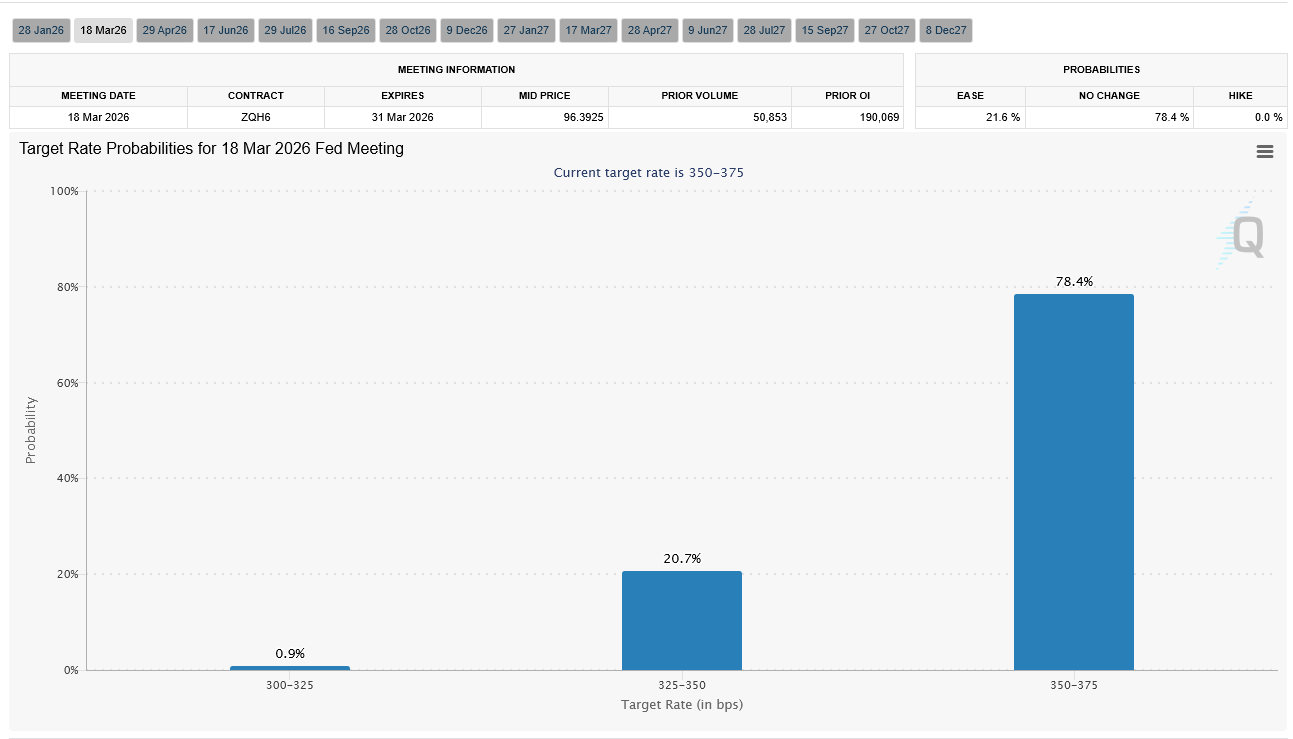
A further major shift is now unlikely, reinforcing the sense that the next chair will define the policy direction for 2026 and beyond.
Meanwhile, Powell faces an unusual political backdrop. A Justice Department investigation related to his congressional testimony about cost overruns to renovate Federal Reserve headquarters included a subpoena for records.
Chairman Powell said the issue does not affect monetary policy. But the survey has deepened the debate over central bank independence as a leadership change approaches.